get rid of
get rid of – idioms
Deixe uma resposta
get rid of
shed
/ ʃed /
Verb Forms:
Present Simple:
I / you / we / they:
shed
/ʃed/
he / she / it:
sheds
/ʃedz/
Past Simple:
shed
/ʃed/
Past Participle:
shed
/ʃed/
-ing form:
shedding
/ˈʃedɪŋ/
[shed something (often used in newspapers)]
[get rid of]
to get rid of something that is no longer wanted.
se livrar de algo que não é mais desejado.
A fábrica está eliminando um grande número de empregos.[shed something (+ adv./prep.)]
[drop]
[formal] to take off a piece of clothing.
[shed something]
[drop]
[British English] (of a vehicle) to lose or drop what it is carrying.
[shed something]
[skin/leaves]
if an animal sheds its skin, or a plant sheds leaves, it loses them naturally.
[shed something (on/over somebody/something)]
[light]
to send light over something; to let light fall somewhere.
[shed tears]
[tears]
[formal or literary] to cry.
[shed blood]
[blood]
[formal] to kill or injure people, especially in a war.
[shed something]
[water]
[formal] to have the quality of causing water or liquid to run off and not sink in
[formal] ter a qualidade de fazer com que a água ou o líquido escorra e não afunde.
As penas de um pato repelem água imediatamente.smell {somewhere (algum lugar)} out
/ smel aʊt /
(phrasal verb)
to fill a place with a smell, in an unpleasant way (encher um lugar com um cheiro, de uma forma desagradável).
smell {something/someone (algo ou alguém)} out
/ smel aʊt /
(phrasal verb)
1 – to discover where something or someone is by smelling (descobrir onde algo ou alguém está pelo cheiro).
2- become aware of not through the senses but instinctively. (tomar consciência não através dos sentidos, mas instintivamente.).
3 – recognize or detect by or as if by smelling. (recognize or detect by or as if by smelling).
outsmell
(transitive)
VERB FORMS:
Past Simple:
outsmelt
outsmelled
Past Participle:
outsmelt
outsmelled
he / she / it:
outsmells
-ing form:
outsmelling
AUDIOS:
outspeed
/ a͡ʊtspˈiːd /
VERB FORMS:
Past Simple:
outsped (US)
outspeeded (UK)
Past Participle:
outsped (US)
outspeeded (UK)
he / she / it:
outspeeds
-ing form:
outspeeding
(transitive verb)
to outdo or surpass in speeding; to go faster than.
ultrapassar ou superar em velocidade; ir mais rápido do que.
(noun)
[countable, uncountable]
a public festival, usually one that happens at a regular time each year, that involves music and dancing in the streets, for which people wear brightly coloured clothes.
[contável, incontável]
um festival público, geralmente aquele que acontece em um horário regular a cada ano, que envolve música e dança nas ruas, para as quais as pessoas usam roupas de cores vivas.
[countable]
(North American English)
(also fair British and North American English, British English also funfair)
a type of entertainment in a field or park at which people can ride on large machines and play games to win prizes.
[countable]
an outdoor public event or celebration involving entertainment, games, food and drink, etc., often organized by a town or village.
[singular]
carnival of something (formal) an exciting or brightly coloured mixture of things.
carnaval.
folia festança.
(North American English)
parque de diversões.
Carnival
/ˈkɑːrnɪvl/
(plural)
Carnivals
/ˈkɑːrnɪvlz/
come up with – phrasal verb
Encontrar, pensar ou fazer algo e levar, propor ou sugerir o resultado para alguém.
let you know
let {someone} know
(idioms)
Avisar você.
have a great time
(Idiom)
Divertir-se bastante.
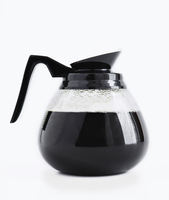
coffee pot
(noun)
jarra de café